
 Ha Noi
  Ho Chi Minh
  Ha Long
  Ninh Binh
  Da Nang
  Sapa
Sapa  Siem Reap
  Phnom Penh
  Koh Rong Island
  Sihanoukville
  Luang Prabang
  Vientiane
  Pakse
Pakse  Xieng Khouang
  Savannakhet

 Private Tours
  Group Tours
  Multi-Day Tours
  Tailor-made Tours
  MICE Tours
Need Help?
(+84) 917 506 881

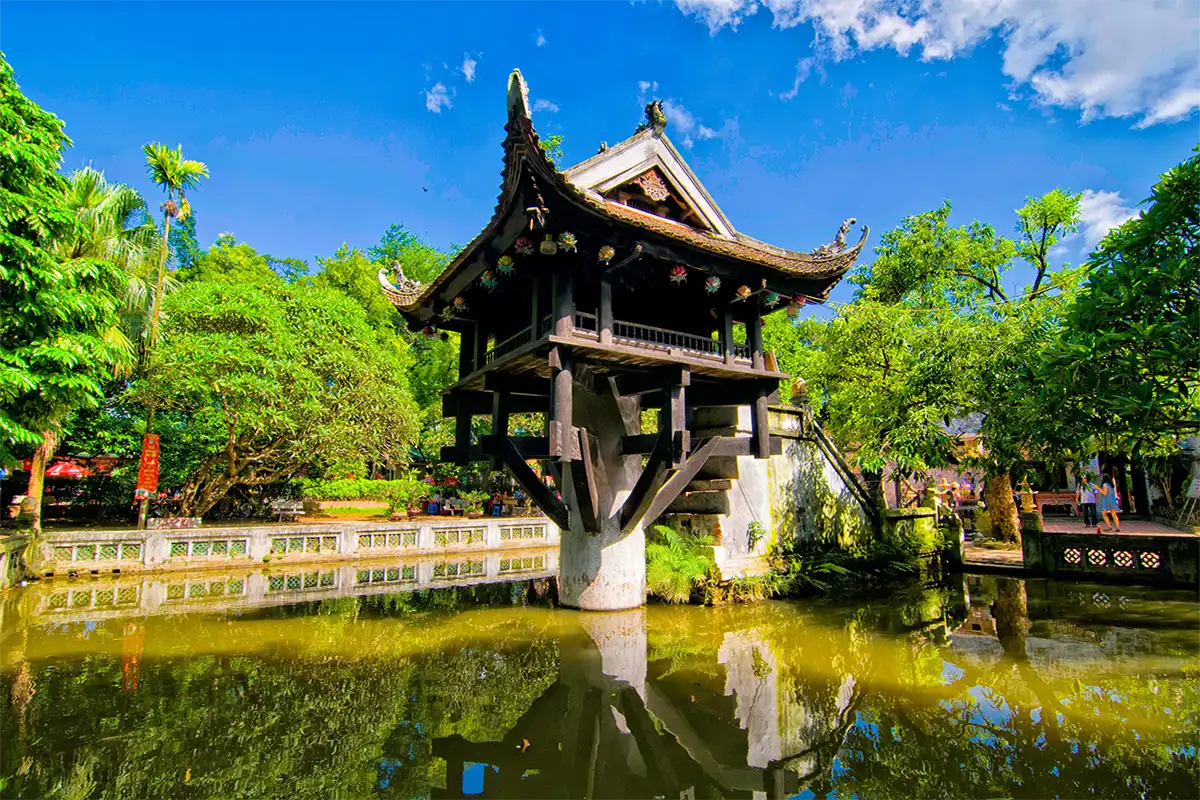
Located near the Ho Chi Minh Mausoleum, the One Pillar Pagoda (Chùa Một Cột) is a must-see attraction for travelers in Hanoi. Originally built in 1049 under Emperor Ly Thai Tong, this ancient wooden pagoda stands on a single stone pillar rising from a lotus pond — a symbol of purity and enlightenment in Vietnamese Buddhism. Despite its small size, the pagoda carries great historical and spiritual significance, representing the deep cultural roots of the nation.
The One Pillar Pagoda is part of the Ho Chi Minh Complex, easily recognizable by its unique structure shaped like a blooming lotus. It is surrounded by peaceful gardens and traditional Vietnamese architecture, offering visitors a serene escape right in the heart of Hanoi. The pagoda is not only a place of worship but also a national symbol featured in many cultural and historical representations of Vietnam.
The One Pillar Pagoda is located about 2 km from Hanoi’s Old Quarter, making it easily accessible by taxi, Grab, or motorbike. Public buses such as No. 09, 22, and 45 also stop nearby at Ba Dinh Square. You can conveniently visit it together with the Ho Chi Minh Mausoleum and the Presidential Palace as they are all within walking distance.
*Tip: Visit early in the morning to enjoy the peaceful atmosphere and capture beautiful photos without the crowd. Remember to dress modestly, as it’s a place of worship.
According to legend, Emperor Ly Thai Tong dreamt of the Goddess of Mercy (Quan Âm) handing him a baby boy while seated on a lotus. Shortly after, he married and had a son, inspiring him to build a pagoda supported by a single pillar in the middle of a lotus pond to express his gratitude. The design symbolizes a lotus rising from muddy water — purity emerging from suffering.
The pagoda has been rebuilt several times due to war and weather damage, with the most recent restoration completed after 1955. Today, it remains one of Vietnam’s most revered cultural sites and a must-visit destination for both pilgrims and tourists alike.